Troy Bayliss: the Ducati legend who won the hearts of the fans
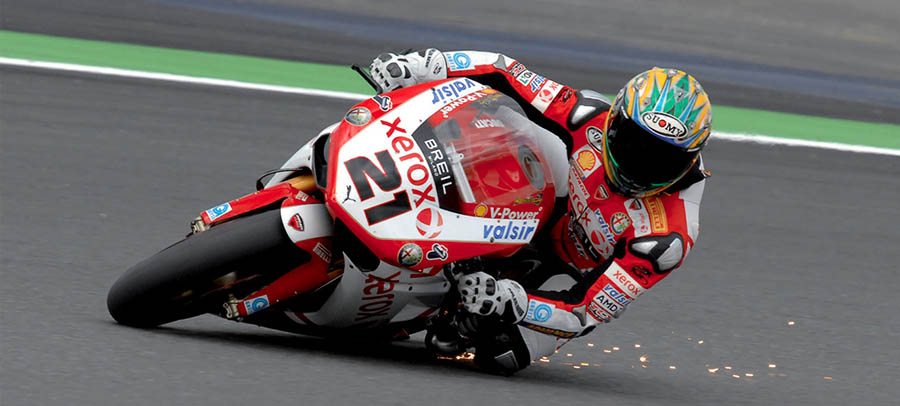
Troy Bayliss
Winning so much and for many years is the dream of any driver, but entering the hearts of the fans regardless of the number of laurels can be considered an even greater success. Troy Bayliss can boast this achievement: not the most successful rider in the history of the Ducati, but universally recognized as the darling of the fans of the Borgo Panigale manufacturer (certainly of the latest generations). So let's go back to the career of the Australian driver.
The beginnings
Born on March 30, 1969 in Taree, Australia, from an early age he began to show a passion and talent for two wheels. Already at the age of 10 he began to cultivate the dream of becoming a professional rider, dividing himself between motocross and dirt track. A dream, however, that his family, for economic reasons, is unable to support. Troy therefore had to abandon – at least temporarily – his career on two wheels and, after finishing his studies, he began working as an apprentice coachbuilder at the town's mechanical workshop: hence the nickname "Carrozziere".
The call of the bikes, however, is too strong to put it aside. In 1992, at the age of 23, he finally managed to return to the world of motorsport by entering the Australian 250SP championship with a Kawasaki KR-1, and moving up to the 600 class the following year. 1993 is a year in which he also takes another big step, marrying Kim who will be his inseparable life partner.
In 1994 he participated in his second season of the Aussie 600 championship where he finished sixth, improving the following year when he climbed to second place. Results obtained with sacrifice and riding a motorcycle purchased "with my and my wife's savings", he would declare some time later. 1996 was another positive year, with the move to Kawasaki to race in the national Superbike championship finishing in third place.
Ducati and Superbike: Bayliss' great loves on two wheels
1997 seemed to be the turning point for Bayliss, hired by Suzuki to race as a wild card in the World Superbike round at Philip Island. The Australian driver responds present, closing both races with a good fifth place. Evidently the air at home brought him well: at the end of the year, he was called by Suzuki to compete in the Australian Grand Prix riding a 250 in place of the injured Noriyasu Numata. Despite these good results, he did not find a team in the World Championship for 1998. At 29 he was already considered "old", but thanks to his results he managed to deny hasty judgments. The GSE Ducati team called him to compete in the British Superbike championship: after a sixth place in his debut year, he triumphed in the 1999 season.
The success in the United Kingdom led Ducati to focus on the Australian rider, initially diverting him to the AMA Superbike championship with the Vance & Hine team. The start was promising, with a pole position in the opening race. Bayliss seemed destined to play his cards in this competition but, during 2000, an episode occurred that definitively turned his career around. On the Philip Island circuit, an injury to Carl Fogarty – 4-time world champion and top driver of the official team Ducati Infostrada – forced the driver to retire from the scene. In his place, to continue that season in the Superbike World Championship, Bayliss was called. The debut is to be forgotten because he does not even finish the race, but he redeems himself later by winning 2 victories – in the German and European grands prix – and finishing with a good sixth place finish.
Thus the love story between Troy and the Ducati blossoms definitely. 2001 was his year: in the Superbike World Championship, in a crescendo of positive results, he closed with his first laurel in this category by winning the duel with the American Colin Edwards. Confirming is always more difficult than winning, which Bayliss feels on his skin. 2002 began in an extraordinary way for the rider from Taree, with 14 wins in the first 18 races. Edwards, however, is thirsty for revenge and is always attached to him, stringing a series of victories in the season finale that leads him to the world title.
2002 marked the end of Bayliss' first experience in Superbike who, still riding the Ducati, moved to MotoGP with Loris Capirossi as his teammate. The first season in the new class saw the Australian finish third 3 times and finish in the standings in sixth position. A good debut year, followed by 2 disappointing ones at the helm first of Ducati and then of Honda. Nothing to do: MotoGP is not the right terrain for Bayliss, who also has a revenge to take in Superbike.
The return from his "first love" materializes as best it could. Obviously driving a Ducati, Bayliss leaves no chance to his opponents. The world championship is his with 431 points, 95 more than his first rival James Toseland. The fans of the Ducati therefore return to dream, being then repaid for their affection also with another World Cup won by Bayliss in 2008 (the third and last of his career).
Exit in style
Retired after 2008, he made a brief return in 2015 to replace the injured Davide Giugliano. The 15 points collected in 4 races earned him the last satisfaction given to himself and to the people of the Ducati: at the age of 45 years, 10 months and 8 days, he became the second oldest rider to score points in the Superbike World Championship (the record is still held by Frantisek Mrazek, who scored points at the 1991 Canadian GP at the age of 55 years and 25 days).
Share this content